
Legal Document Automation for Faster and Safer Workflows sets the stage for this enthralling narrative, offering readers a glimpse into a story that is rich in detail and brimming with originality from the outset. As technology continues to revolutionize various industries, the legal sector is not left behind.
Automation in legal document workflows is paving the way for more efficient, accurate, and secure processes. Let's delve into the world of legal document automation and explore its implications.
Overview of Legal Document Automation
Legal document automation refers to the use of technology to streamline and simplify the process of creating, editing, and managing legal documents. This involves using software tools to generate templates, populate them with relevant data, and customize documents according to specific requirements.Automating legal document workflows is crucial for law firms, legal departments, and professionals to increase efficiency, reduce errors, and save time.
By automating routine tasks such as drafting contracts, agreements, and other legal documents, professionals can focus on more strategic and complex legal matters.
Examples of Common Legal Documents that Can be Automated
- Non-disclosure agreements (NDAs)
- Employment contracts
- Lease agreements
- Wills and trusts
- Court forms and pleadings
Benefits of Using Automation in Legal Processes
- Increased efficiency: Automation speeds up document creation and review processes.
- Accuracy: Automation reduces the likelihood of errors and inconsistencies in legal documents.
- Consistency: Automated templates ensure that all documents adhere to the same standards and formatting.
- Cost savings: By reducing manual labor and minimizing errors, automation can lead to cost savings for legal professionals.
- Compliance: Automated workflows help ensure that legal documents comply with relevant laws and regulations.
Tools and Software for Legal Document Automation
Legal document automation has become increasingly popular in the legal industry, with a variety of tools and software available to streamline workflows and increase efficiency. Let's take a closer look at some of the popular options in the market and how they are revolutionizing the way legal practices operate.
Popular Tools for Legal Document Automation
- ContractExpress: ContractExpress is a widely used tool that allows legal professionals to automate the creation of contracts and other legal documents. It offers customizable templates and clause libraries to expedite the drafting process.
- HotDocs: HotDocs is another popular choice for legal document automation, offering a user-friendly interface for creating templates and automating document assembly. It is known for its flexibility and integration capabilities with other software.
- Documate: Documate is a cloud-based platform that enables users to create interactive workflows for document generation. It allows for collaboration among team members and integrates with popular tools like Google Drive and Salesforce.
Features Comparison
| Tool | Key Features |
|---|---|
| ContractExpress | - Customizable templates
|
| HotDocs | - User-friendly interface
|
| Documate | - Cloud-based platform
|
Streamlining Workflows and Increasing Efficiency
Legal document automation tools play a crucial role in streamlining workflows by reducing manual work and minimizing errors. By automating document creation, review, and approval processes, legal professionals can save time and focus on more strategic tasks. These tools also ensure consistency in document formatting and content, leading to improved accuracy and compliance.
Case Studies and Success Stories
One law firm reported a 40% reduction in document creation time after implementing ContractExpress for automating contract drafting.
Another legal department saw a significant decrease in errors and revisions by using HotDocs to automate the creation of complex legal documents.
Implementation of Legal Document Automation
Implementing legal document automation can significantly improve workflows, efficiency, and accuracy in legal processes. Here are some steps, challenges, tips, and best practices to consider:
Steps for Implementing Automation in Legal Workflows
- Identify key areas for automation: Determine which tasks can be automated to streamline processes.
- Choose the right automation tool: Select a software or tool that aligns with your specific needs and workflows.
- Train staff: Provide comprehensive training to ensure smooth adoption of the automation tool.
- Test and refine: Conduct thorough testing and make necessary adjustments before full implementation.
- Monitor and evaluate: Continuously assess the effectiveness of automation and make improvements as needed.
Challenges and How to Overcome Them
- Resistance to change: Address resistance through communication, training, and highlighting the benefits of automation.
- Data security concerns: Implement robust security measures and protocols to protect sensitive information.
- Integration issues: Work closely with IT teams to ensure seamless integration with existing systems.
Tips for Ensuring a Smooth Transition to Automated Processes
- Communicate effectively: Keep staff informed and involved throughout the implementation process.
- Start small: Begin with pilot projects to test the waters before scaling up automation initiatives.
- Provide ongoing support: Offer assistance and resources to help employees adapt to the new automated workflows.
Best Practices for Integrating Automation Tools into Existing Systems
- Ensure compatibility: Choose automation tools that can seamlessly integrate with your current systems.
- Customize as needed: Tailor automation solutions to fit the unique requirements of your legal workflows.
- Regularly review and update: Stay proactive in updating and optimizing automation tools to maximize efficiency.
Security and Compliance in Legal Document Automation
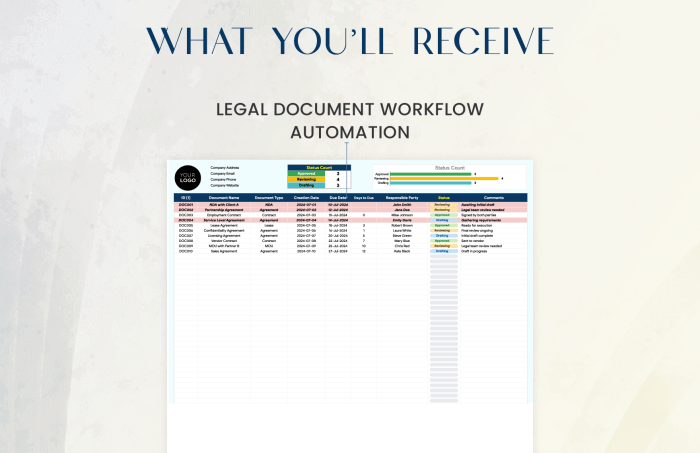
When it comes to automating legal documents, ensuring security and compliance is paramount to protect sensitive information and maintain legal standards. Implementing robust security measures is crucial to prevent data breaches and unauthorized access.
Importance of Security Measures
Security measures play a vital role in legal document automation to safeguard confidential information and prevent data breaches. By implementing encryption, access controls, and secure authentication protocols, organizations can mitigate the risk of unauthorized access and ensure data privacy.
Compliance Requirements
Compliance requirements must be carefully considered when implementing automation in legal workflows. Legal regulations such as GDPR, HIPAA, and CCPA dictate how sensitive data should be handled, stored, and transmitted. Adhering to these regulations is essential to avoid legal repercussions and maintain trust with clients.
Data Protection and Confidentiality
- Utilize encryption techniques to secure data both at rest and in transit.
- Implement access controls to restrict unauthorized users from accessing sensitive information.
- Regularly audit and monitor the system for any vulnerabilities or suspicious activities.
Prevention of Security Breaches
-
Ensure regular software updates and patches to address security vulnerabilities.
- Train employees on security best practices and the importance of safeguarding sensitive data.
- Conduct regular security assessments and penetration testing to identify and address potential vulnerabilities.
Ultimate Conclusion
In conclusion, Legal Document Automation for Faster and Safer Workflows is a game-changer in the legal industry. By embracing automation tools and software, legal professionals can streamline their workflows, increase efficiency, and ensure the security of sensitive information. As we look towards the future, the integration of automation in legal practices will undoubtedly continue to shape the way legal documents are processed and managed.
FAQ Resource
How can legal document automation benefit law firms?
Legal document automation can help law firms save time, reduce errors, improve accuracy, and enhance overall productivity. By automating repetitive tasks, legal professionals can focus on more strategic aspects of their work.
What security measures should be in place when implementing legal document automation?
When implementing legal document automation, it is crucial to have robust encryption protocols, access controls, regular security audits, and data backup procedures in place to ensure the protection of sensitive information.
Are there specific compliance requirements that legal professionals need to consider when using automation tools?
Legal professionals need to ensure that automation tools comply with data privacy regulations such as GDPR and HIPAA. It is essential to have clear policies and procedures in place to maintain compliance when handling sensitive legal documents.